

Our Top Floral Mechanics That Are Foam Free
Welcome to Abby Garden, where luxury floral design meets sustainability. We’re leaders in crafting foam-free floral installations for weddings and events. We use eco-friendly floral mechanics to create jaw-dropping designs while honoring our planet—and we teach you how to do it, too! This blog covers our top foam-free floral mechanics and answers frequently asked questions about sustainable design.

Why Floral Mechanics are so Important in Sustainable Design
Floral foam is by far the most ubiquitous tool in the floral industry. Unfortunately, it’s terrible for people and the planet. We talk more about the dangers of floral foam in our blog, The Foam Free Advantage, but here’s the SparkNotes version: Floral foam is plastic. It contains harmful chemicals that hurt humans when inhaled and hurt the planet once dumped in a landfill. Floral foam is also single-use, making it more expensive to purchase for every occasion.
But weddings and events still deserve stunning, immersive floral designs! So we have perfected new floral mechanics that are safe, reusable, and sustainable. When implemented properly, these floral mechanics create beautiful, dynamic installations that floral foam simply cannot achieve. However, using these new tools and strategies requires practice and patience. They often require greater composition skills and visual mastery. Luckily, we’re here to help you learn how to use these tools and create unforgettable designs that are both functional and beautiful.


Our Favorite Foam-Free Floral Mechanics
So we’re ditching the floral foam. Instead, we’re using reusable, sustainable floral mechanics, starting with reusable containers and floral frogs. Almost every one of our designs uses one of these containers at the base! And then, when we begin gathering stems and securing them, we start with angel vine. Angel vine is a wire vine plant that adds structure to your designs while blending in naturally. The next must-have, foam-free tool is chicken wire. When we’re building a larger, more complicated installation, we use chicken wire to create shape and securely hold stems. Lastly, we utilize reusable ties in almost every design. They create flexibility in the construction while being eco-conscious!

Frequently Asked Questions About Our Foam-Free Floral Mechanics
What do you think about agrawool and oshun pouches as floral foam alternatives?
Agrawool and Oshun pouches are great eco-friendly foam substitutions if you really feel that you need a foam-like substance in your design. However, they fall short for three reasons. First, they lack proper hydration, which means they need constant refilling, even while in the cooler. This makes pre-event work very difficult. Second, the actual filler (wool and coconut fiber, respectively) struggles to hold soft stems like tulips and ranunculus. I’ve even seen agrawool disintegrate while in transport, and the Oshun pouch isn’t ideal for large stem counts. Lastly, both agrawool and Oshun pouches are still single-use products. They often add at least $10 to every small arrangement and between $20 and $60 to every large-scale design. You need to carefully monitor your stock and have plenty of storage. Add that with the extra labor required to design and hydrate while using these products, and I simply don’t think they are worthwhile.
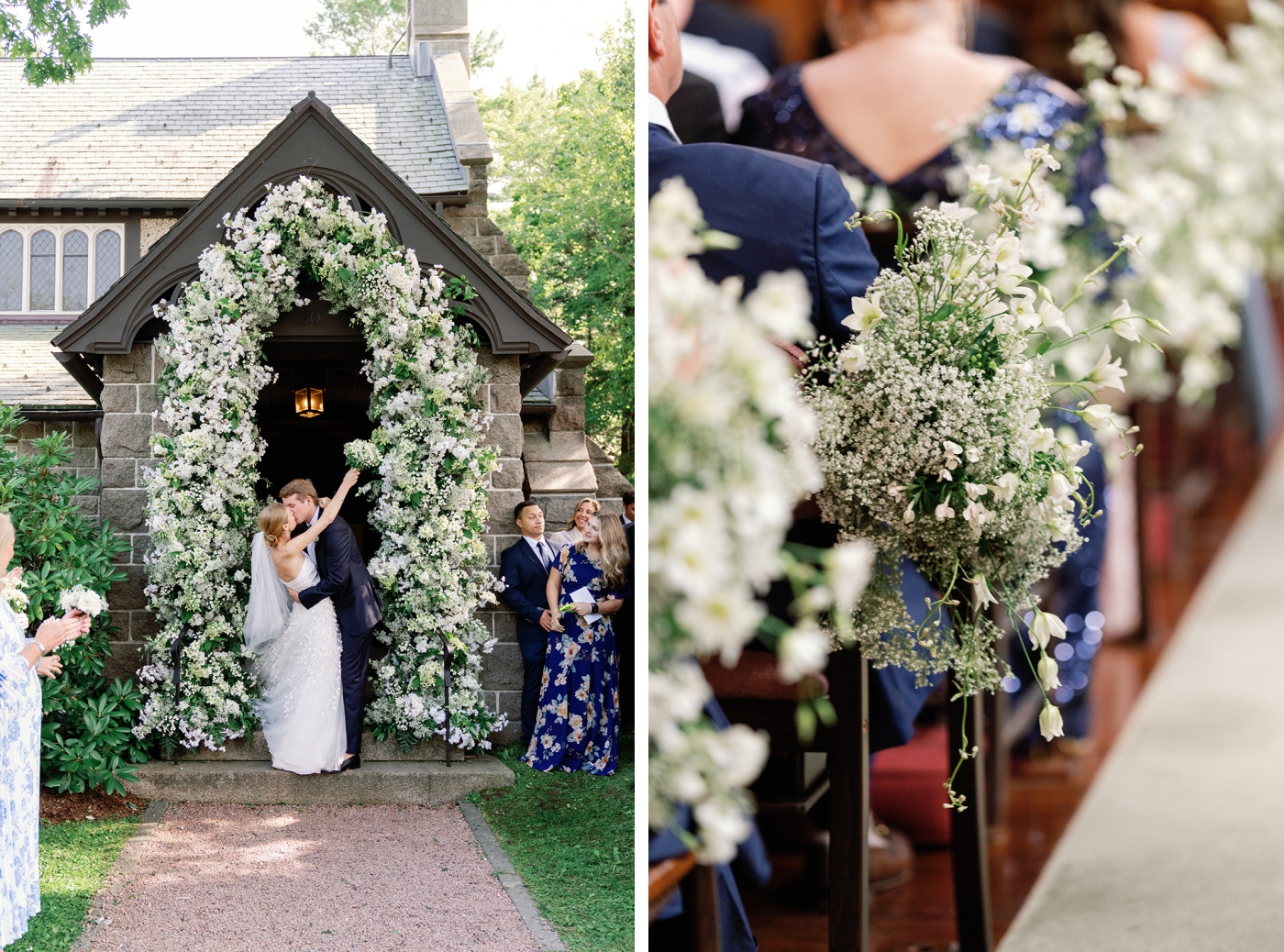
What mechanics do you use for low-lying aisle arrangements?
We talk a lot about grand-scale installations, but understated, low-lying arrangements are just as beautiful! For these styles, we have small, medium, and large rectangular vessels that we can use for a variety of designs. We use hairpin flower frogs as the base and layer chicken wire over top. If we need to add extra weight and stability, we use plastic and rebar lawn stakes.

How do you cover the wire mechanics underneath your designs?
We frequently hear florists talk about trying to hide wires on the underside of designs, especially when the design calls for minimal greenery. We handle this by using a teeny tiny size chicken wire. This makes the mechanics much easier to hide. If we’re designing an arrangement that is focused on blooms with little to no greenery, we will use stems like tweedia and campanula to hide the wire. Or, if the design is truly minimal, we’ll swap the chicken wire out for angel vine, which blends in perfectly!
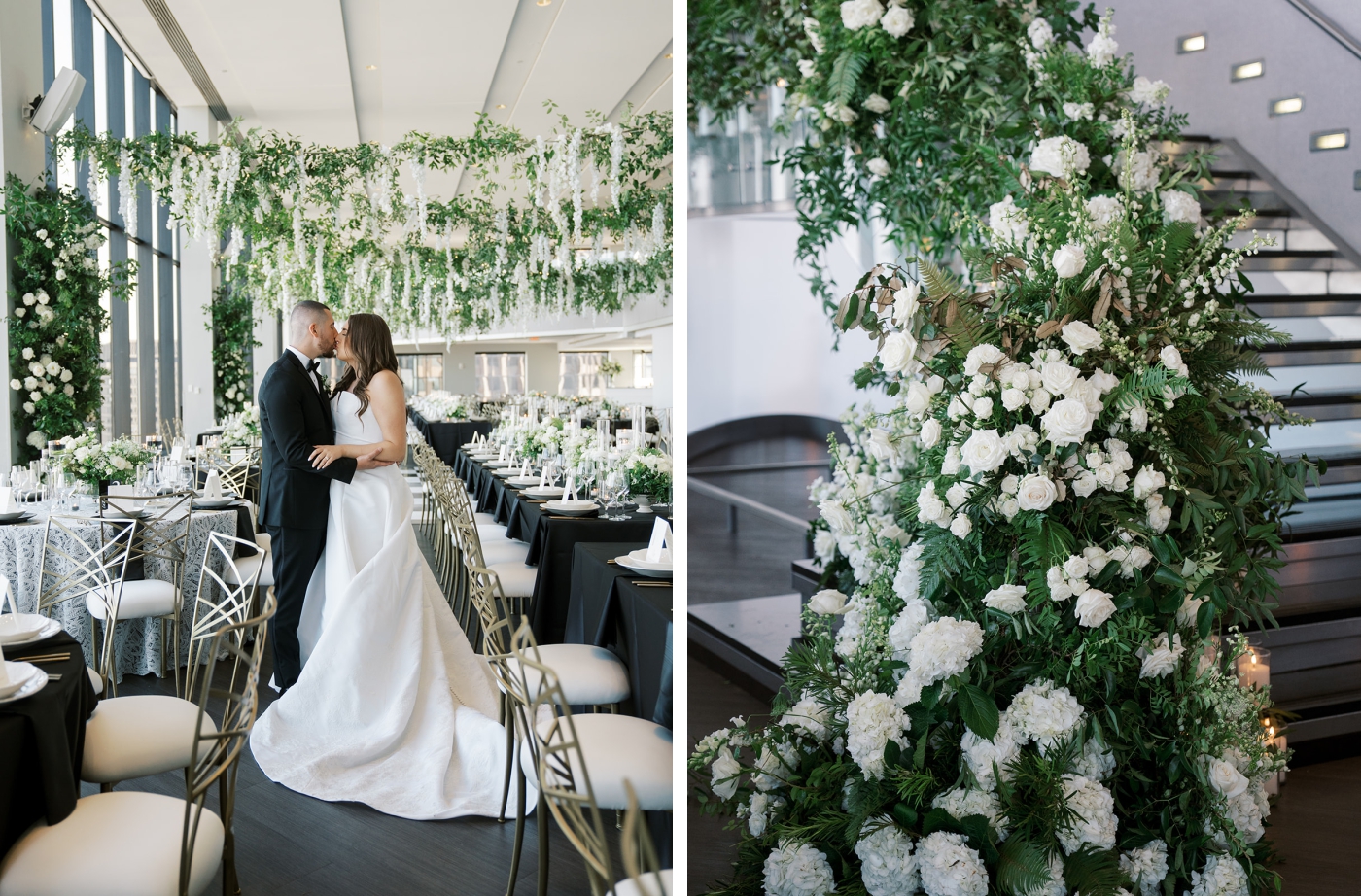
Where to Start if You Want to Switch to Foam-Free Floral Mechanics
We’ve spent the last years finding the best process to completely eliminate floral foam from our floral designs. And now, you can learn how we do it! The Foam Free Mechanics Guide is the perfect place to start for florists who want to be more intentional and sustainable. Inside, you’ll find our proven methods broken into simple steps. Or, if you’re ready to go all in, we offer a Complete Collection with all of our design and foam-free guides in one bundle! From choosing reusable materials to repurposing your floral mechanics, the complete collection includes everything you need to know to reduce waste in your floral business. We are so happy to welcome more florists into sustainable design practices, and we can’t wait to see what you design!
12/09/2025
COMMENT LOVE